
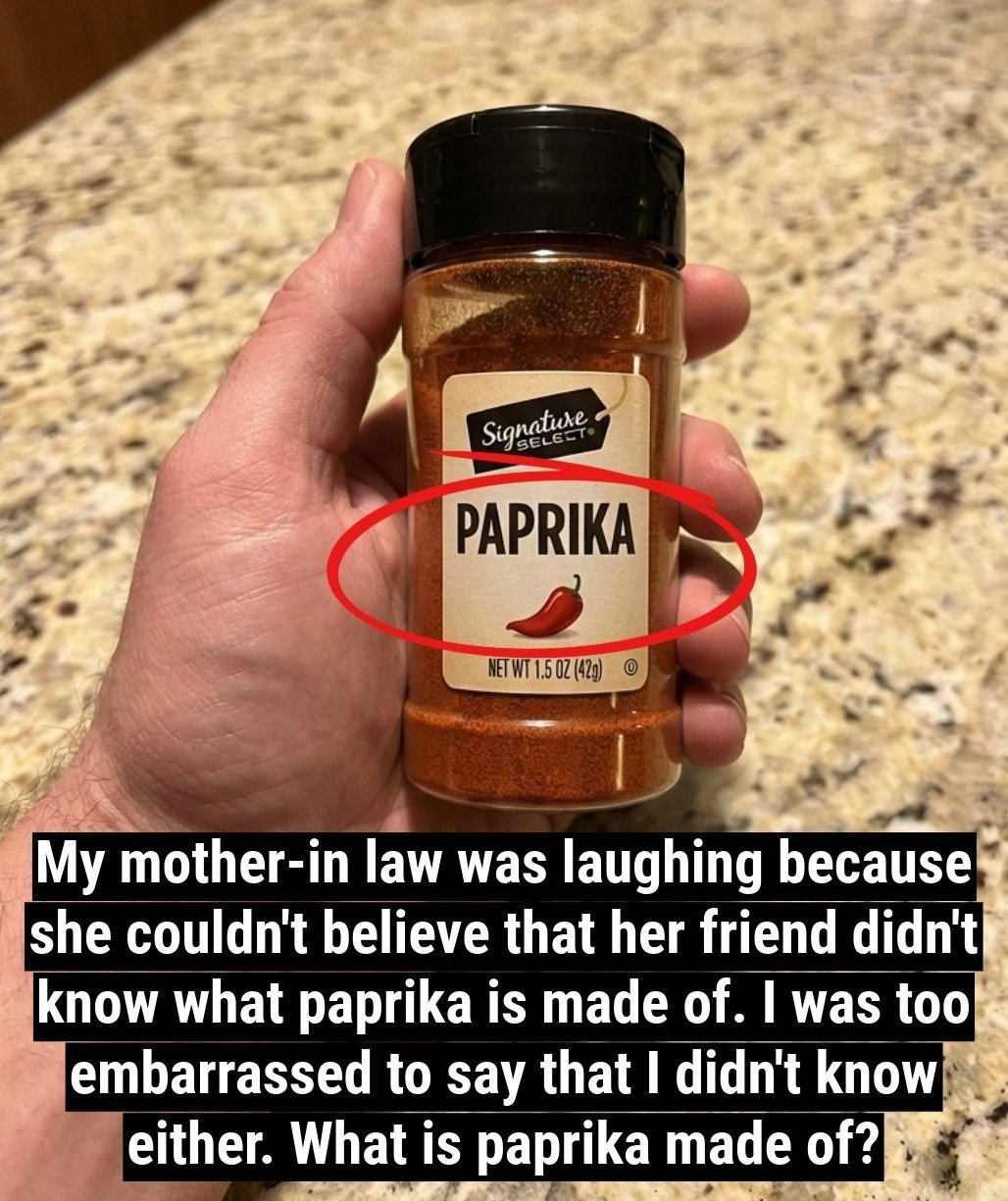
Open almost any spice cabinet and you’ll find it: a small jar of deep red powder labeled paprika. It’s a staple—sprinkled over deviled eggs, stirred into stews, dusted onto roasted potatoes for color. And yet, despite its ubiquity, a surprising number of people still aren’t quite sure what paprika actually is.
Some assume it’s an exotic blend of spices. Others think it’s artificially colored. A few even suspect it’s related to peppercorns. The truth is far simpler—and somehow more surprising. Herbs& Spices
Paprika is made from peppers.
Not mysterious peppers. Not rare peppers. Just peppers.
The Pepper Behind the Powder
Paprika comes from dried and ground varieties of Capsicum annuum, the same species that gives us bell peppers, jalapeños, and cayenne. The difference lies in the specific cultivars used and how they’re processed.
Most paprika is made from sweet red peppers that have been allowed to fully ripen. Once harvested, the peppers are dried—traditionally by air or smoke—then ground into a fine powder. That vibrant red color? Completely natural. It’s the concentrated pigment of ripe pepper flesh.
Where Did Paprika Originate?
Paprika has a surprisingly rich history. Peppers originated in Central and South America and were brought to Europe by Spanish and Portuguese explorers in the 16th century. The spice found a particularly enthusiastic home in Hungary and Spain, where it became a cornerstone of national cuisines. Fruits& Vegetables
Hungarian paprika is perhaps the most famous. Hungarian farmers developed distinct pepper varieties and processing methods that created a range of paprikas—from mild and sweet to hot and pungent. The spice became so central to Hungarian cooking that the country produces multiple grades, each with its own flavor profile.
Spanish paprika (pimentón) takes a different path. The peppers are traditionally smoked over oak fires before grinding, giving the spice a distinctive smoky depth. Spanish cooks use it in chorizo, patatas bravas, and countless other dishes.
The Many Faces of Paprika
Not all paprika is created equal. The flavor, color, and heat level depend on three factors:
The pepper variety
Processing methods
Hungarian Paprika Grades
Grade Flavor Profile Heat Level
Különleges Mild, sweet Very mild
Édesnemes Sweet, bright Mild
Félédes Semi-sweet Mild to medium
Rózsa Mildly pungent Medium
Erős Pungent, robust Hot
Spanish Paprika (Pimentón)
Type Flavor Profile
Dulce Sweet, mild
Agridulce Bittersweet, medium
Picante Hot, pungent
Smoked Deep, smoky (from oak fire drying)
Why Paprika Sometimes Loses Its Color
Discover more
Fruits & Vegetables
East Asian Cuisine
salads
You’ve probably noticed that paprika can fade over time. That vibrant red slowly turns to a dull brownish-orange. This isn’t a sign of spoilage—it’s just the nature of the spice. Herbs& Spices
Paprika’s color comes from carotenoids (natural pigments). Exposure to light, heat, and air breaks these compounds down over time. To keep your paprika vibrant:
Store in an airtight container
Keep away from light (a dark cupboard is ideal)
Replace after about a year for best color and flavor
How Paprika Is Made: From Pepper to Powder
The process is beautifully simple:
Harvesting – Peppers are left on the plant until fully ripe, when they develop maximum color and sweetness.
Drying – Traditionally, peppers are spread on racks and dried in the sun or in drying houses. For smoked paprika, they’re dried over smoldering oak fires.
Stemming and Seeding – The stems and seeds are removed (though some commercial grades may include seeds).
Grinding – The dried peppers are ground into a fine powder.
Sifting – The powder is sifted to achieve a uniform texture.
The Taste: What Paprika Actually Brings to Food
Discover more
Seasonings & Blends
Agridulce
garlic
Unlike its spicy relatives (cayenne, chili powder), paprika’s primary contribution isn’t heat—it’s color and depth.
Sweet paprika adds a mild, slightly sweet pepper flavor and that signature red color. Food
Hot paprika brings gentle heat along with the same earthy sweetness.
Smoked paprika offers a deep, savory smokiness that can transform a dish.
The flavor is subtle but essential. It doesn’t announce itself loudly, but you’d notice immediately if it were missing.
Culinary Uses: How to Make the Most of Paprika
Discover more
spice blends
Garlic
Sweet and Sour Sauce
Paprika is incredibly versatile. Here’s how to use it well:
Toast It
Frying paprika briefly in oil releases its flavor and deepens its color. This is why many recipes start with paprika in hot oil—it’s not just for show. Herbs& Spices
Use It as a Finishing Spice
A sprinkle of paprika adds visual appeal to deviled eggs, potato salads, and creamy soups.
Let It Infuse
Discover more
Salads
Food
Meat & Seafood
For Hungarian goulash, paprika is the star. The spice is added early and allowed to meld with onions and meat over long, slow cooking.
Mix with Other Spices
Paprika pairs beautifully with garlic, onion, cumin, and cayenne—it’s the backbone of many spice blends, including barbecue rubs and adobo.
The Bottom Line
Paprika isn’t exotic. It’s not a mysterious blend. It’s simply dried, ground peppers—the same peppers that grow in gardens and fill farmers’ markets.
What makes it remarkable is its versatility. From the sweet, gentle warmth of Hungarian édesnemes to the deep, campfire smokiness of Spanish pimentón, paprika can be mild or intense, subtle or bold. It’s a spice that can quietly support a dish or take center stage. Salads
Next time you reach for that little red jar, you’ll know exactly what’s inside: peppers, dried and ground to perfection.
