
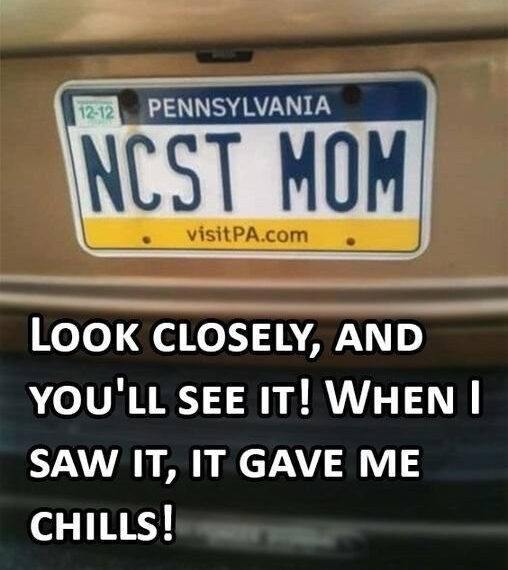
In Perth, Western Australia, a driver’s personalized plate recently made headlines—not because it was proudly bold, but because it was ingeniously subtle. The plate “370HSSV” looked innocuous at first glance. But when flipped upside down, the characters rearranged visually to spell “ahole” (i.e. “asshole”). The twist: it managed to pass the transport authority’s screening process and be legally issued—despite nearly 1,000 plate applications being rejected in a given year for being too offensive or suggestive. NT News+2The Chronicle+2
The media coverage emphasized the contrast: plates like SAUC3D or RAMP4GE are regularly rejected for their suggestive connotations, yet here was one that cleverly dodged scrutiny with a visual trick. The West Australian+3NT News+3The Daily Beat+3 The funny part? Many people only noticed the hidden message after someone flipped a photo or looked more closely—the disguise did its job. NT News+2The Daily Beat+2
Once shared, the plate went viral. Viewers debated whether the trick was intentional or accidental. Some praised the driver’s ingenuity, others raised ethics, and many more were simply amused. It became a meme, a conversation starter, and a case study in how regulatory systems struggle to police clever language. NT News+2The Chronicle+2
Why Do So Many Plates Get Rejected?
To appreciate how remarkable this viral plate is, one must understand what rules and standards the authorities use to reject custom license plates—and how many fail to pass them.
The Criteria for Rejection
In Western Australia and many places with personalized plates, the review body evaluates each proposed plate combination against criteria such as:
Whether it can be interpreted offensively or derogatorily
Whether it contains or hints at references to drugs, violence, sexual content
Whether it can be read in reverse, mirror view, or stylized font to yield inappropriate meanings
Proximity to existing plate series or confusion with normative plates
Use of protected names, trademarks, or mandated exclusions (e.g. military, religious, government references)
General public decency or “community expectations”
In the case of WA’s transport authority, for example, many plates are knocked back under those rules for being lewd, rude, or crude. The West Australian+2NT News+2 Examples of rejected plates include RAMP4GE, SAUC3D, F4K3 T4X1, and BUYAGRAM. NT News+2The Chronicle+2
Volume of Rejections
The scale is significant: nearly a thousand personalized‑plate applications are rejected yearly for being deemed offensive or inappropriate in WA. NT News+1 That means for every plate that makes it through with cheeky or suggestive content, dozens more are blocked.
The system is constantly on guard: review teams check for creative mindset substitutions — letter/number swaps (e.g. 3 for E, 4 for A), backwards readings, word fragments, mirror readings, and more.
Why Some Slips Through
Even with strong rules, some plates get approved because:
The meaning is hidden or subtle (not obvious at first glance)
The offensive intent isn’t overt or flagged by the algorithm or review panel
Visual tricks, like flipping or mirror reading, are harder for rules to catch
Reviewers may rotate, vary in discretion, or lack capacity to detect every pun or inversion
The system is reactive; some plates are challenged only after being seen publicly
Thus, a cleverly disguised plate like 370HSSV, which hides its true meaning in inversion, can sneak past the filters.
The Psychology & Appeal Behind “Hidden” Plates
Why does the flipped‑plate phenomenon resonate so strongly with people?
Cleverness Over Crudeness
A plate that hides its cheekiness is funnier to many than one that’s overtly vulgar. It’s a playful wink rather than a full shout.
It leverages subtlety, surprise, and a discovery moment—viewers feel smart when they decode it.
Rebellion + Rule Subversion
There’s a rebellious thrill in beating a censor system without being overt. It becomes a small act of subversion.
The plate sets a boundary test—not crossing it overtly, but pushing it cleverly.
Memetic Potential
Visual trickery (flip, mirror, inversion) is shareable. It lends itself to social media, memes, discussion.
People love spotting hidden messages; it becomes an interactive game.
A Statement on Systems
It highlights how regulatory systems (like plate approval) can’t catch every nuance.
It becomes a commentary: language, symbols, and perception are slippery.
Thus the viral plate is not just funny—it’s a small cultural lightning rod.
Anatomy of the Viral Plate: How “370HSSV” Works
Let’s break down why that exact combination managed to evade detection and still deliver the punch.
Visual Mechanics
In upright orientation, 370HSSV looks like an ordinary mix of letters and numbers—nothing obviously offensive.
Flipped upside down, the red‑colored characters become visually legible as “ahole” (i.e. “asshole”).
Because the transformation relies on inversion, the meaning is hidden unless you physically flip or view the image reversed.
Why It Evades Standard Checks
The approval process likely checks the text in its normal orientation. The hidden (flipped) meaning isn’t part of the submitted representation.
The plate does not contain forbidden words in standard reading (no obvious profanity visible).
The pun or derogatory message is implicit, not explicit—thus less likely to be caught by automated filters or cursory review.
Edge Cases & Risk
If the authority or a citizen complains, the plate can be revisited or revoked.
Some might argue that inverted reading is within the scope of “reverse reading” checks—but authorities apparently missed this case.
The ingenuity lies in disguising the offense by relying on a nonstandard perspective.
How Social Media Amplified It
The plate would likely remain a local curiosity, but social networks transformed it into a global talking point. Here’s how:
Discovery & sharing – a passerby or commenter spotted the flipped reading and posted a photo.
Virality through novelty – people love puzzles, hidden messages, “aha” moments.
Media pickup – local news and social pages ran stories, giving reach.
Discussion & debate – thousands commented on the creativity, ethics, enforcement.
Memetic spread – shared on Instagram, TikTok, automotive groups, amusing plate‑collection fans.
Sustainment via references – the story gets brought up in plate approval debates, censorship, public policy conversation.
The digital amplification made what would have been a local quirky plate into a broadly recognized stunt.
Lessons & Takeaways: What This Episode Teaches
This viral plate moment offers a variety of lessons—for policymakers, for creative people, and for everyday observers.
For Transport & Regulatory Bodies
Don’t rely solely on forward reading filters; account for mirror/inversion logic in screening algorithms.
Periodically review approved plates for emerging loopholes.
Engage public feedback—crowdsourcing detection of subversive plates.
Define clear post‑issuance complaint and revocation channels.
Be consistent and transparent about rejection reasons to avoid perceptions of bias.
For Creators & Plate Applicants
Cleverness may succeed where overtness fails—but it carries risk (revocation, fines).
Always test how your plate might be read in mirrors, angles, flips, decimal substitution.
Understand local regulations on personalized plates, “reverse reading” bans, or appeal rules.
Remember that public sentiment and authority tolerance can shift.
For the Public & Observers
Hidden messages catch our attention because they activate the mental puzzle circuit.
Humor, creativity, and rule bending often resonate more than blunt provocations.
Such cases spark conversations about what is offensive, how societies regulate expression, and how rules adapt to creativity.
It’s also a reminder that regulation lags innovation—and that subversive expression often finds a way.
Broader Context: Personalized Plates & Controversy
This plate is far from unique in provocative plate culture. Around the world, car owners push boundaries of what a plate can say. Some relevant points in that broader context:
Many jurisdictions reject thousands of plate applications annually for offensive content.
Some plates referencing drugs, violence, sexual innuendo, or protected names are commonly disallowed.
Clever substitutions (numbers for letters, alternate spellings, mirror reading) are part of the cat‑and‑mouse game between applicants and regulators.
Some previously allowed plates have been revoked after public complaint or reappraisal.
Plate culture overlaps with identity, humor, marketing, vanity, and protest.
The viral “370HSSV” is a standout case, because of how elegantly it hid the message and how widely it was shared.
Hypotheses & Speculation: Intentional or Accidental?
One intriguing question: Did the driver plan this from the start, or was it an unintentional coincidence—a plate submitted innocently but later interpreted?
Arguments for intentional:
The choice of characters (3, 7, 0, H, S, S, V) is not random; the inversion reading is too precise.
The plate’s hidden word is clearly a known insult, making it less likely by chance.
Many who saw it praised the “genius” design, implying such puns often stem from deliberate planning.
Arguments for accidental:
It’s possible someone applied for “370HSSV” without awareness of what it spells upside down.
Regulatory systems might not preview flipped readings; so a benign-looking submission could slip through.
After-the-fact reinterpretation is common — people sometimes see words in random letter combos.
But whether intentional or not, the plate succeeds because it occupies that ambiguous space between joke and regulation—a space that regulatory systems struggle with.
What Happens Next? Regrets, Rejection, or Legacy?
Once such a plate goes viral, several possible outcomes emerge:
Complaint & Revocation: Authorities receive complaints, review the plate, and may revoke or force a change if it’s deemed offensive under any reading.
Rule Change / Policy Update: The governing body may update screening rules to explicitly prohibit reversed or inverted messaging.
Public Discussion & Media: More media coverage, cultural commentary, perhaps making the plate a local legend.
Plate Holder Reaction: The owner may choose to surrender, defend, or lean into the viral notoriety.
Permanent Culture Reference: The plate may be referenced in future debates over censorship, personalized identity, or creative expression.
Given the precedent of revoking controversial plates, it’s plausible this one will come under review—though its clever obfuscation may complicate that.
Why People Are Fascinated by License Plate Whimsy
Why do stories like this capture so much attention? A few reasons:
Hidden messages delight us — they invite discovery, which triggers a mini dopamine hit.
Rule bending appeals — a funny rebellion against formal systems is satisfying.
Personalization as self‑expression — license plates are one of the few public, regulated forms of personal branding.
Viral meme potential — puzzles, flips, optical tricks are ideal for social media sharing.
Cultural conversation starter — it allows debate on censorship, decency standards, creativity, and identity.
Thus the “370HSSV” plate is not just a prank—it resonates at cultural, regulatory, and meme levels.
Imagining Alternative Designs & Variations
To further illustrate the creativity of plate hacking, here are hypothetical variants using inversion, mirror tricks, and letter/number substitution that might slip through:
EVIL3R → upside down yields “RiLIVƎ”? (maybe “Evil?”)
ML0VEU → when flipped, “U E0LM” → “u eolm”?
5C0NDY → when flipped, “Y DN0C5” → maybe “Y Dnocs”
S1CKO4 → flipped could look like “h0KCI s”?
L0V3R5 → might read “S3V0L” reversed → ambiguous but maybe “SEVOL”
H3LL0S → upside-down spells “S0LL3H” → looks like “solleh” (hello backwards)
FUZZ13 → flips to “3IZZuF” → “izzuf”
These examples show how letter‑number selection, orientation, and nonobvious mapping make detection difficult. Designers often test upside-down or mirror reading to see what hidden words emerge.
How to Spot Subversive Plates: A Mini-Guide
If you want to be a plate sleuth, here are tips to detect hidden or “rogue” license plates:
Flip the image or plate physically — view upside down; do letters form other words?
Mirror horizontally or vertically — some tricks use mirror symmetry.
Substitute numbers for letters. 3↔E, 4↔A, 0↔O, 1↔I, 5↔S, 2↔Z, 7↔T
Read backward in reflections (rear-view mirrors): some plates rely on mirror reading.
Check at different fonts, lighting, angles — weird spacing or font may mask the real shape.
Compare to banned word lists — even a partial match may expose the hidden word.
Watch for ambiguous characters — like “S” vs 5, “Z” vs 2, “H” vs “4” — ambiguous shapes help disguise.
Look at multiple interpretations — sometimes the “normal reading” is benign but the alternate reading is the message.
A regulatory authority that uses these test patterns is more likely to catch trick plates, but many systems don’t or can’t.
The Broader Implications: Expression, Regulation & Creativity
This viral plate moment is more than a prank—it reflects broader tensions in society: freedom, regulation, expression, hegemony, and how rules adapt to creativity.
Expression vs Decency
How do authorities draw the line between benign self‑expression and public offense?
Hidden messages test those boundaries: they aren’t overt insults, but they carry intent.
Regulation and Innovation
Systems designed to block offensive content must constantly adapt to new clever forms (inversion, substitution, visual trickery).
Creative users often explore the edges, finding loopholes—forcing regulators to refine rules.
Social Media & Amplification
A local trick becomes global in an instant. Social networks have democratized cultural attention.
The viral nature often gives the creator more impact than the original intent.
Symbolism of Everyday Objects
License plates are mundane and regulated; turning one into a statement or joke highlights how ordinary forms can carry meaning.
It blurs the line between branding, identity, and humor.
What This Plate Means in the Public Imagination
This case will likely stay in public memory for several reasons:
It’s “harmless but naughty”: the hidden insult is cheeky rather than truly aggressive, making it shareable.
It pokes fun at authority: it highlights how even in regulated domains, creativity sneaks in.
It sparks “did you see it?” immediacy: people show it to each other, test others, delight in the hidden reveal.
It becomes a metaphor: for censorship, for wit, for how clever things hide in plain sight.
This plate will be quoted, referenced, and retold in plate lore, fantasy design lists, and conversations about rulemaking.
What Happens if You Try a Similar Trick in Your Jurisdiction?
If you’re tempted to replicate a clever, hidden-meaning plate, here are things to consider:
Investigate your local personalized plate rules: do they explicitly ban mirror reading, reverse reading, or inversion tricks?
Be prepared for complaints or revocation: many settings allow display reviews after complaints.
The novelty may wear out: what’s clever once becomes cliché fast.
Ethical consideration: hidden insults or messages may offend people inadvertently or be misinterpreted.
Enforcement may come later: even approved plates can be rescinded if public outcry arises.
Use creativity carefully, not recklessly.
Closing Thoughts
The “370HSSV” plate is more than a funny viral moment: it’s a study in human ingenuity, regulatory challenge, symbolic rebellion, and social media power. It reminds us that:
Systems always have loopholes
Language and symbols can be twisted in unexpected ways
Humor, subtlety, and artful disguise often resonate more than blunt crudeness
Regulators must evolve rules to match creative modes
Ordinary objects can become cultural flashpoints in the digital age
Whether the driver intended the result or merely stumbled into it, the plate left an indelible mark. And as long as human creativity meets rule systems, stories like this will continue to entertain, provoke, and challenge the boundaries of expression.
