
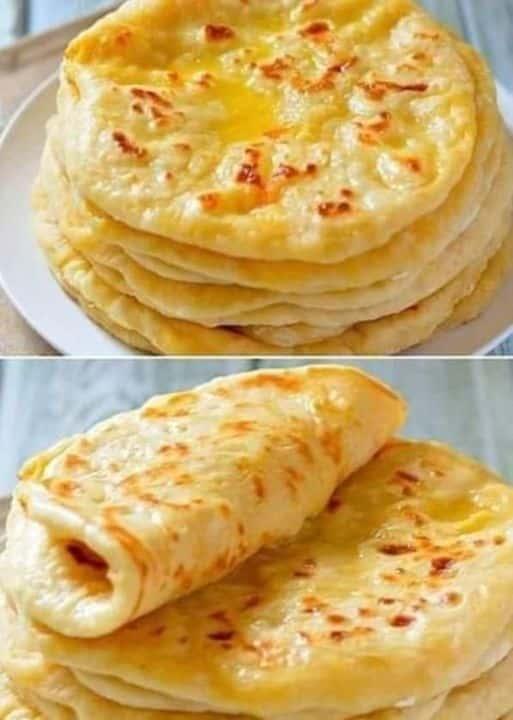
There is a category of bread that exists in almost every culture — the simple, stovetop flatbread that requires no oven, no special equipment, and no advanced technique, yet produces something so genuinely satisfying that it becomes the bread you make when you want bread now, when the oven feels like too much effort, when you want the entire kitchen to smell wonderful within the hour. Bazlama is Turkey’s version of this bread, and it may be the best version that exists anywhere. Known in rural Turkish communities as “village bread” and eaten at breakfast, with meals, as a vehicle for dips and spreads, and fresh from the skillet as a snack on its own, bazlama is a leavened flatbread that occupies a category somewhere between naan and pita but is, in the opinion of many people who have tried all three, significantly better than either. It is thick, pillowy, and cloud-soft inside, with a lightly golden and subtly blistered exterior, and it delivers a gentle tang from yogurt that makes it taste more complex and interesting than any bread this simple has any right to be.
The use of yogurt in bazlama is not incidental — it is central to what makes this flatbread so good. The acidity in yogurt performs two important functions simultaneously: it relaxes the gluten network in the dough, producing a tender, yielding crumb that stays soft even after the bread has cooled, and it reacts with the yeast to create a more complex fermentation environment that contributes subtle flavor depth to the finished bread. Plain yogurt or Greek yogurt both work well, with Greek yogurt producing a slightly richer, more substantial dough due to its higher protein content. The combination of yeast for lift and yogurt for tenderness is what gives bazlama its characteristic texture — thick and fluffy but never heavy, soft all the way through but with enough structure to hold fillings or stand up to enthusiastic dipping.
Ingredients
3 cups (375 grams) all-purpose flour, plus a little extra for dusting and kneading
1 cup warm water — the right temperature is important: it should feel comfortably warm against the inside of your wrist, approximately 100 to 110 degrees Fahrenheit (38 to 43 degrees Celsius). Too hot and it will kill the yeast; too cold and the yeast will not activate properly
2 teaspoons instant or active dry yeast
1 teaspoon granulated sugar — this feeds the yeast and contributes to the golden color of the bread
Half a cup plain yogurt or Greek yogurt, at room temperature
2 tablespoons extra virgin olive oil, plus a little more for cooking
1 teaspoon fine salt
For finishing: 3 tablespoons melted butter or extra virgin olive oil, a handful of finely chopped fresh parsley, and a pinch of red chili flakes (optional). This traditional topping is brushed over the warm bread immediately after it comes off the pan and is one of the great simple pleasures of Turkish home cooking.
Step-by-Step Instructions
Step 1: Activate the Yeast
In a large mixing bowl, combine the warm water, yeast, and sugar. Stir briefly to dissolve the yeast and sugar into the water. Set the bowl aside in a warm place — near a warm oven, on top of the refrigerator, or simply in a warm corner of the kitchen — and allow the mixture to rest for 5 to 10 minutes. During this time, the yeast will activate and the mixture will become visibly foamy and bubbly, with a distinctly yeasty aroma. This foaming is confirmation that the yeast is alive and active. If the mixture does not foam after 10 minutes, the yeast may be expired or the water temperature may have been incorrect — it is better to start again with fresh yeast than to proceed with inactive yeast, as the bread will not rise properly.
Step 2: Build the Dough
Once the yeast is foamy and active, add the yogurt and olive oil to the bowl and whisk or stir until the yogurt is fully incorporated into the liquid. The mixture will look slightly curdled or uneven at this stage — this is normal and will come together as you add the flour. Add the salt and approximately three-quarters of the flour to the bowl. Stir with a wooden spoon or sturdy spatula until a rough, shaggy dough forms. Once the mixture is too thick to stir effectively, use your hands to bring it together into a ball. Turn the dough out onto a lightly floured surface.
Step 3: Knead the Dough
Knead the dough by hand for 8 to 10 minutes, working with the heel of your hand to push the dough away from you, then folding it back toward you and rotating it a quarter turn before pushing again. During the first few minutes, the dough will feel sticky and uncooperative. Add the remaining flour a tablespoon at a time as needed during the kneading process — only enough to prevent the dough from sticking to your hands and the surface, not enough to make it dry. The finished dough should be smooth, soft, and slightly tacky: when you poke it with a finger, the dough should release your finger easily without leaving wet dough behind. A common description of correctly kneaded bazlama dough is that it feels like the soft part of your earlobe. If you have a stand mixer with a dough hook, knead on low speed for 6 to 8 minutes until the dough is smooth and pulls away cleanly from the sides of the bowl.
Step 4: Let the Dough Rise
Form the kneaded dough into a smooth ball and place it in a lightly oiled bowl, turning it once to coat all sides with oil. Cover the bowl tightly with plastic wrap or a clean, damp kitchen towel and place it in a warm location. Allow the dough to rise until it has doubled in size, which typically takes 1 to 1.5 hours at room temperature in a warm kitchen. If your kitchen is cool, you can create a warmer environment by placing the covered bowl in a turned-off oven with only the oven light switched on — the heat from the bulb creates a gentle, consistent warmth that is ideal for yeast dough. Do not rush this step: the rise is what develops both the texture and the flavor of the bread.
Step 5: Divide and Shape
Once the dough has doubled in size, turn it out onto a lightly floured surface and punch it down gently to release the accumulated gas. Divide the dough into 6 to 8 roughly equal pieces — 6 pieces produce larger, thicker flatbreads; 8 pieces produce smaller ones that are a bit more manageable in the pan. Shape each piece into a smooth ball by pulling the sides of the dough down and under, creating surface tension. Place the balls on the floured surface, dust them lightly with flour, and cover them with a clean kitchen towel. Allow them to rest for 15 minutes. This short rest relaxes the gluten that was worked during shaping, making the dough considerably easier to roll out without it springing back.
Step 6: Roll Out the Flatbreads
Working with one ball at a time and keeping the remaining balls covered, roll each piece of dough on the lightly floured surface into a round disc approximately 6 to 7 inches in diameter and about a quarter inch thick. Do not roll the discs too thin — the thickness is part of what makes bazlama so distinctively fluffy, and a disc that is rolled too thin will not develop the same pillowy interior. If the dough springs back when you try to roll it, allow it to rest for another 2 to 3 minutes and try again. Repeat with the remaining balls, keeping the rolled discs covered with a towel while you work through the batch.
Step 7: Cook in the Pan
Heat a cast iron skillet or heavy non-stick pan over medium heat for 2 to 3 minutes before adding the first flatbread — the pan should be properly preheated but not smoking. A cast iron skillet is the best choice for bazlama because it retains and distributes heat very evenly, producing consistent browning across the entire surface of each flatbread. Brush the pan very lightly with olive oil or leave it dry, depending on your preference. Place one rolled disc in the pan and cook for approximately 2 to 3 minutes on the first side. As it cooks, you will see small bubbles begin to form across the surface of the dough — this is the yeast continuing to produce gas as it is exposed to heat, and it is a very satisfying thing to watch. After 2 to 3 minutes, the underside should be golden and marked with lightly darker spots. Flip the flatbread and cook the second side for another 2 to 3 minutes. If all goes well — and it almost always does — the bread will puff dramatically during the second side, inflating into a beautiful pillow as steam builds up inside. This puffing is the hallmark of a properly made bazlama and the moment that makes everyone in the kitchen stop what they are doing to look.
Step 8: Finish and Serve
Remove the cooked flatbread from the pan and immediately brush the top generously with melted butter or olive oil. Scatter a small handful of finely chopped fresh parsley over the surface and add a pinch of red chili flakes if you like a little heat. Stack the finished flatbreads on top of each other and cover them with a clean kitchen towel while you cook the remaining pieces — the steam trapped in the stack keeps all the bread warm, soft, and pliable. Bazlama is at its very best served warm, within the first 20 to 30 minutes of cooking, though it remains good at room temperature for several hours and makes excellent toast or wraps the following day.
What to Serve with Bazlama
Bazlama is one of the most versatile breads available to a home cook. For breakfast in the Turkish tradition, serve it warm with white cheese, sliced tomatoes and cucumber, olives, and honey — the combination of savory and sweet flavors that makes Turkish breakfast one of the great morning meals in the world. For a simple lunch or snack, brush it generously with garlic butter while it is still hot from the pan and eat it immediately. For a more substantial meal, use it as a wrap for grilled meats — chicken, lamb kofta, beef kebab — with sliced vegetables and a drizzle of yogurt sauce or tahini. It is outstanding alongside soups and stews of all kinds, serving as the vehicle for soaking up every last drop of broth. It can replace pita for hummus and other dips, and it is excellent alongside any Middle Eastern or Mediterranean dish. Bazlama also pairs beautifully with Turkish cacik — the yogurt, cucumber, and herb dip that is one of the essential condiments of Turkish cuisine.
Storage and Reheating
Bazlama is best on the day it is made, and ideally in the first hour after cooking. It stays soft at room temperature for up to two days when stored in an airtight container or wrapped tightly in plastic wrap. For longer storage, allow the flatbreads to cool completely, wrap them individually, and freeze for up to three months. To reheat from room temperature, place in a dry non-stick pan over medium-low heat for about 30 seconds per side — this restores the fresh-cooked texture and warmth far more effectively than a microwave. From frozen, thaw at room temperature for an hour and then reheat in the pan, or heat directly from frozen in a covered pan over low heat for 2 to 3 minutes per side. The reheated bread is genuinely good — not quite the same as fresh from the pan, but close enough to be worth making a large batch specifically to have on hand throughout the week.
