
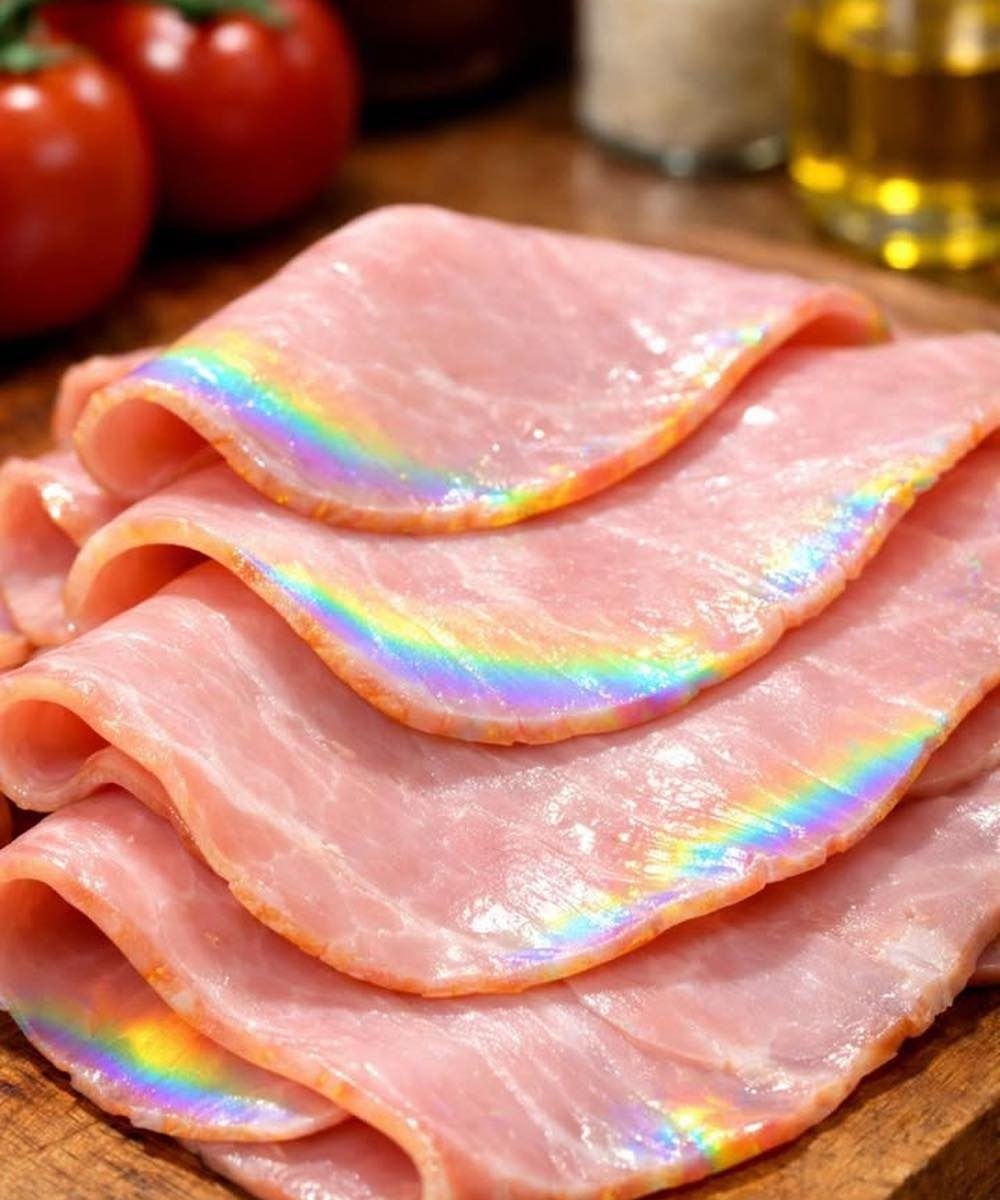
Have you ever taken a slice of cooked ham out of the refrigerator and noticed a strange iridescent sheen on its surface? That glossy, multicolored sheen can be intriguing, but also a little unsettling, especially if you’re unsure whether the meat is still fresh. Seeing those iridescent colors might make you hesitate before biting into it.
In this article, we’ll explore the science behind this effect, explaining why cooked ham can appear iridescent and when this visual characteristic is completely normal. We’ll also share tips on how to tell if your ham is still edible, along with expert advice on buying and storing cured meats to prevent spoilage.
1. What the iridescent sheen on cooked ham really means
The colorful, iridescent sheen sometimes observed on cooked ham is called iridescence. It occurs when the surface structure of the meat bends and reflects light from different angles, producing a range of colors. It’s an effect similar to the iridescent hues seen on soap bubbles or the reflective surface of a DVD. The alignment of muscle fibers, combined with small amounts of fat and the direction of the light, creates this effect.
It’s important to emphasize that iridescence doesn’t mean the meat has gone bad. It’s a natural visual phenomenon caused by the structure of the meat and how it interacts with light. The same effect is often seen on other sliced meats, such as turkey and roast beef.
2. The Science Behind Meat Iridescence
The rainbow effect on meat results primarily from light diffraction. When light strikes the surface of the meat, it scatters between the muscle fibers, which function like microscopic prisms. This scattering separates the light into different wavelengths, creating the appearance of multiple colors, just like a prism transforming white light into a rainbow.
The way the meat is sliced is also important. Very thin cuts allow the muscle fibers to align more evenly, which enhances the diffraction effect. This is why thinly sliced cured meats are particularly prone to displaying this multicolored sheen.
3. When a Rainbow Sheen Is Absolutely Normal
Seeing a rainbow-like sheen on cooked ham is usually harmless and perfectly safe. This is especially true when the meat has been stored properly and is still within its expiration date. The iridescent appearance is a natural characteristic of the meat’s structure and has no impact on flavor or nutritional quality.
Unless there are other warning signs, such as a strange odor or slippery texture, the colorful sheen is not cause for concern. In fact, many people associate this sheen with high-quality cured meats, well-prepared and properly sliced.
4. Visual Signs of Ham Spoilage
Although iridescence in itself isn’t a problem, certain visual changes can indicate that the ham is no longer safe to eat. Unusual color changes, such as green, gray, or brown hues, are clear signs of spoilage. The presence of mold, often visible as fuzzy growth or spots, is another clear warning sign.
If the surface of the ham appears excessively shiny or feels slippery and coated to the touch, it could indicate the presence of bacteria. In these cases, it’s safer to throw the meat away than to take risks.
5. Never Overlook Olfactory and Tactile Checks
Your nose and hands can be as important as your eyesight when evaluating a cooked ham. Fresh ham should have a delicate, slightly sweet smell. Any sour, ammonia-like, or otherwise unpleasant odor usually means the meat has gone bad.
Consistency is also important. The surface should feel dry or only slightly moist, not sticky or slippery. A slimy feel is a classic indicator of bacterial activity and is a clear sign that the ham should be discarded.
6. How Processing and Cutting Create That Shine
The way cooked ham is processed and sliced plays a key role in creating its iridescent appearance. Ham is typically cut into very thin slices to achieve a tender texture and consistent flavor. This thin cut aligns the muscle fibers, increasing light diffraction and producing the characteristic rainbow effect.
In addition, precision slicers create smooth, clean surfaces. The smoother the slice, the more evenly it reflects light, making the multicolored shine more evident.
